
Breast sagging or ptosis
Nipples resting at or below the inframammary fold, pointing downward rather than forward.

Sieveking/Plastic Surgery/Breast Lift
Restored Shape · Youthful Position · Natural Contour
A breast lift restores a firmer contour by removing excess skin, reshaping the underlying tissue, and repositioning the nipple to a naturally elevated position. Where time, pregnancy, breastfeeding, or weight change have altered breast shape and position, mastopexy offers a structural, lasting answer.
Proportion, balance, and authenticity. Lifted and rejuvenated. Never overdone.
Mastopexy is a surgical procedure that corrects breast ptosis — the clinical term for sagging. As skin loses elasticity and breast tissue descends over time, the nipples drift downward and the upper breast flattens. A breast lift addresses this by removing excess stretched skin, reshaping and elevating the breast tissue, and repositioning the nipple-areola complex to a more youthful, forward-facing height.
While a breast lift restores shape and position, it does not significantly change breast volume on its own. Patients who want a higher position combined with greater fullness are often candidates for augmentation mastopexy, which pairs a lift with implants in a single procedure; patients with excess volume alongside ptosis may be better served by a lift combined with a reduction. Dr. Sieveking addresses this distinction directly at every consultation.
The appropriate technique depends on the degree of ptosis, the amount of excess skin, and your individual anatomy. Dr. Sieveking determines the right approach after a thorough evaluation during your consultation — the technique best suited to your anatomy and goals is decided there, never selected in advance.
The periareolar, or donut, lift is indicated for mild ptosis. A single circular incision around the areola border removes minimal excess skin, leaving a scar concealed at the areola margin — best suited for patients needing modest correction.
The vertical, or lollipop, lift is the most common technique, used to restore breast firmness, perkiness, nipple height, and projection.
The anchor, or inverted-T, lift is reserved for significant or severe ptosis with considerable excess skin. Three incisions deliver the most comprehensive correction and allow the surgeon to create the most youthful appearance, with the lower scar hidden in the breast crease. The more extensive scar pattern fades and softens progressively over 12–18 months.
Good candidates are adults in stable general health who have finished having children and reached a stable weight.
Nipples resting at or below the inframammary fold, pointing downward rather than forward.
The upper breast appears flat or deflated as tissue descends over time.
Mastopexy allows reduction and reshaping of the areola at the same time as the lift.
One breast sits lower than the other; a tailored lift can address the visible imbalance.
Volume loss and skin laxity after pregnancy and nursing are among the most common reasons patients seek a lift.
Significant weight reduction often leaves excess skin and repositioned tissue that a lift can address.
Mastopexy corrects the underlying tissue, not just the surface skin — a structural restoration of position, shape, and proportion.
Lifted, forward-facing breasts that reflect a more youthful silhouette, elevated to a naturally higher position on the chest wall.
Reshaping the breast tissue restores the rounded upper contour that gradually descends with age, gravity, and the changes of pregnancy.
The nipple-areola complex is repositioned to a natural height, and oversized or stretched areolae can be reduced at the same time.
A tailored lift can address visible differences in breast position or shape between sides, restoring a more balanced appearance.
Mastopexy corrects the underlying tissue rather than the surface skin alone, for results that hold over time with a stable weight.
Many patients find that bras and clothing fit more comfortably and predictably after surgery, without constant adjustment or compensation.
The philosophy behind every lift is rooted in proportion, balance, and authenticity — results that are lifted and rejuvenated, never overdone.
Individual results vary. Discuss your goals and candidacy at your consultation.
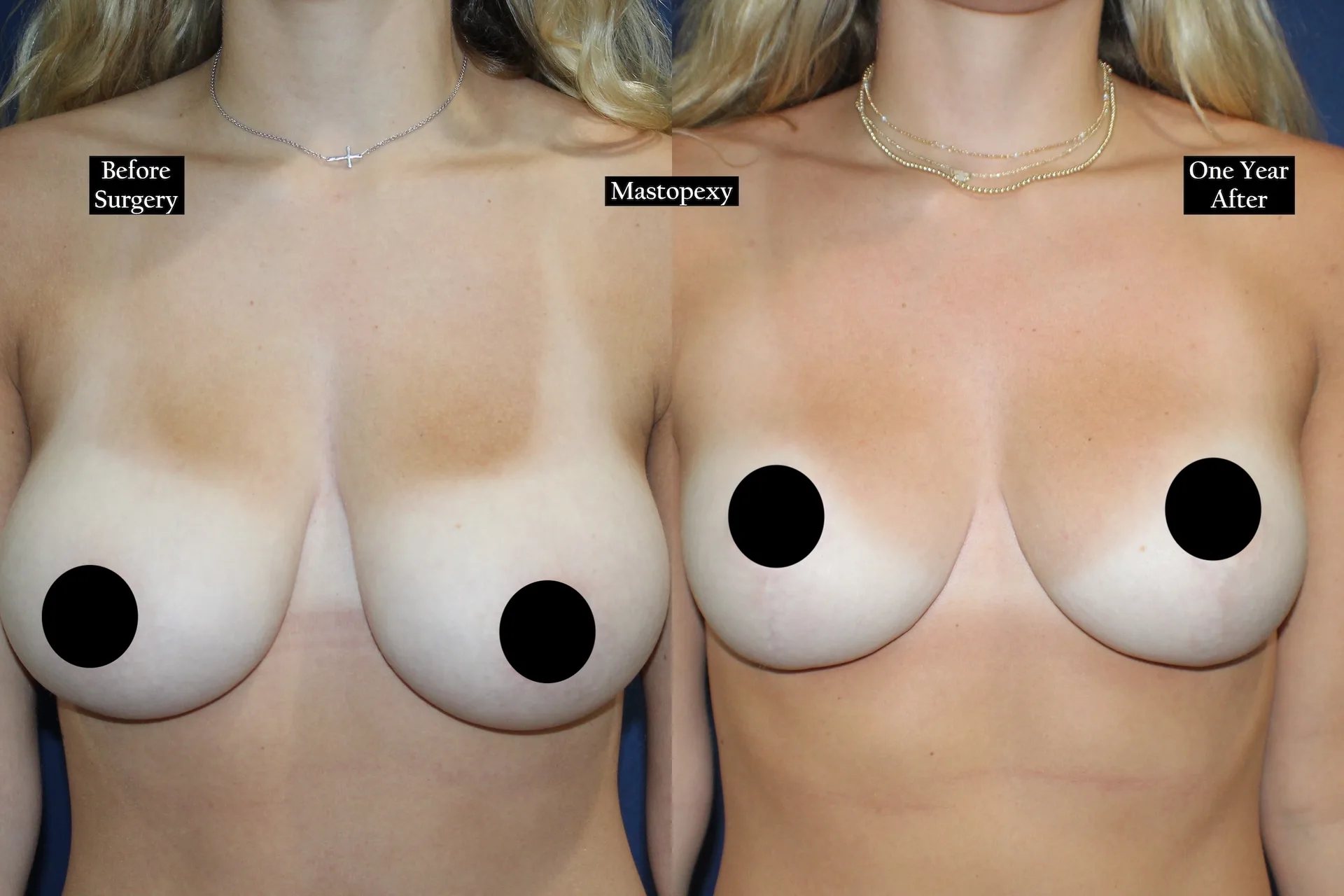
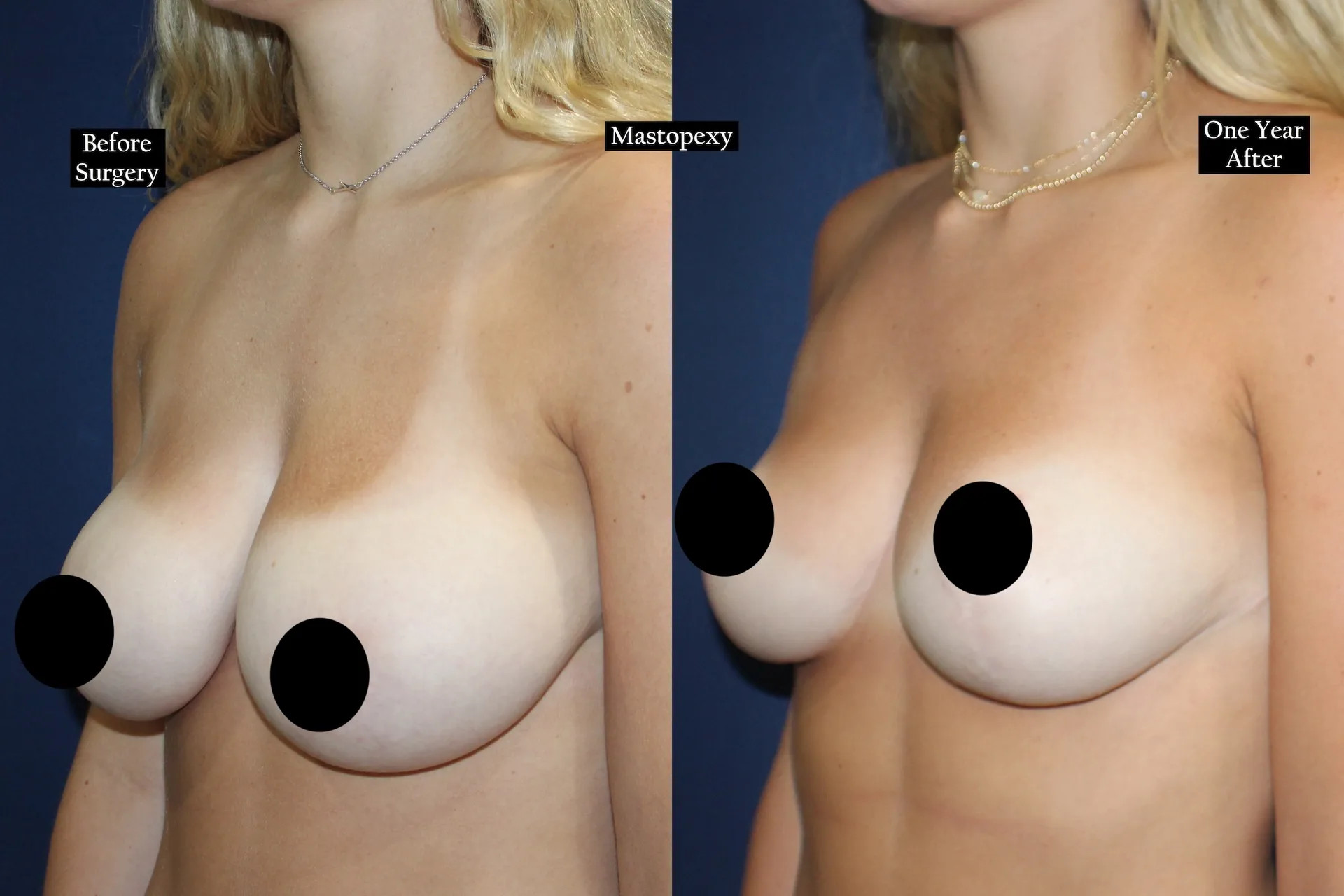
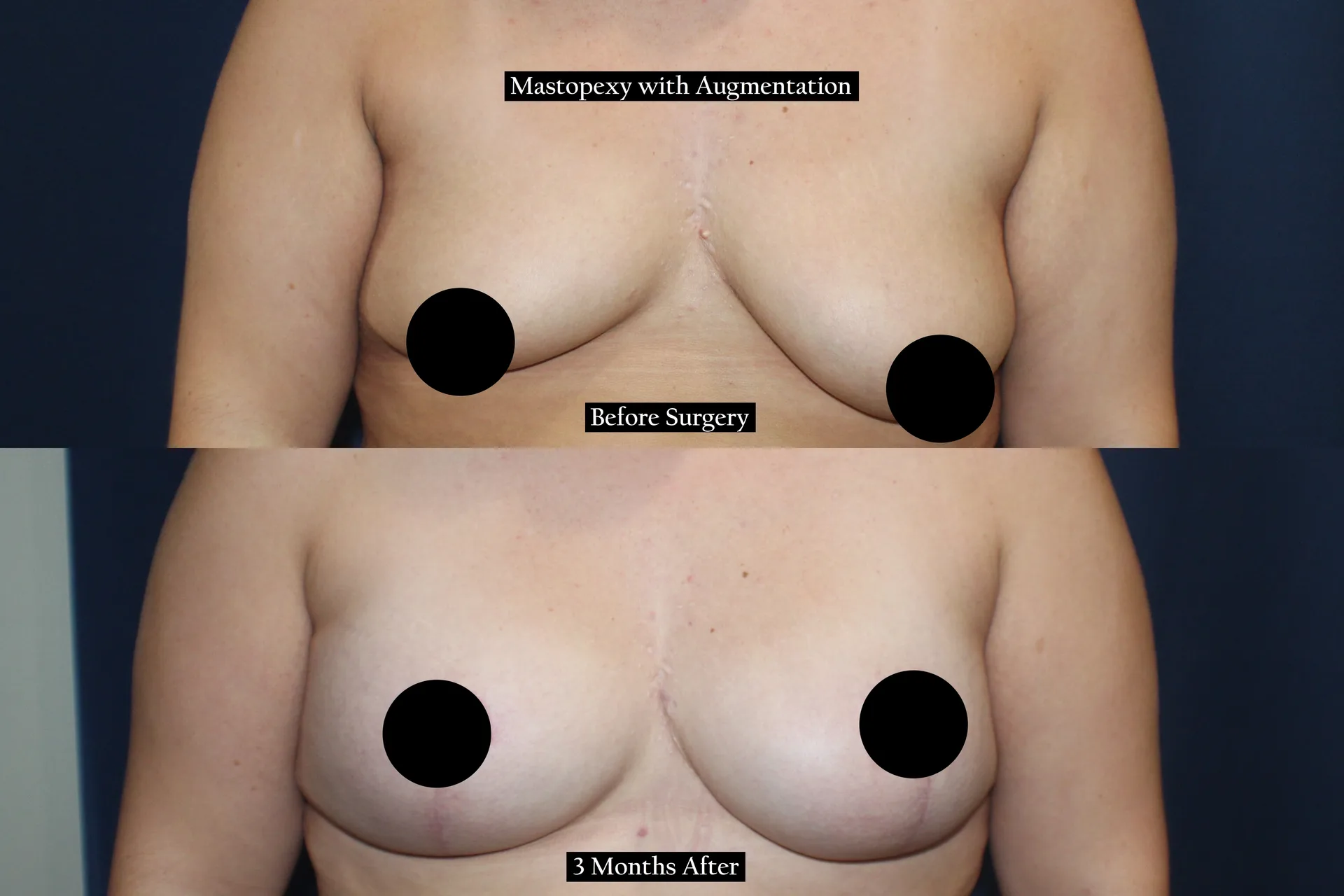
Breast lift cases are included in our full results archive — each pair represents a single patient photographed at the same angle, light, and camera.
Dr. Sieveking evaluates breast anatomy, skin quality, nipple position, and degree of ptosis to determine the appropriate technique. Your goals are discussed in depth, and your medical history, smoking status, weight stability, and future pregnancy plans are all reviewed. Every surgical plan is tailored to your anatomy, never based on a template — and the right technique, from periareolar to anchor, is decided here rather than in advance.
Mastopexy is performed under general anesthesia as an outpatient procedure at Sieveking Plastic Surgery’s brand-new on-site, accredited surgery center, and surgery takes 2–3 hours. The nipple-areola complex remains attached to its blood and nerve supply throughout, preserving sensation and, for most patients, the functional ability to breastfeed. Often a technique of fat removal called SAFE Liposuction is used to address unwanted fat deposits in the upper breast and axilla.
The first 48 hours are for rest in a surgical bra; discomfort, tightness, and swelling are expected and managed with prescribed medication. Drains, if placed, are typically removed within the first week, while strenuous activity and heavy lifting remain restricted. Bruising fades and swelling subsides over weeks 2–4 — many patients return to desk work at approximately 1–2 weeks with Dr. Sieveking’s clearance — and normal activity and light exercise resume gradually over weeks 4–6.
Breast shape settles into its longer-term position over months 3–6, and scars begin fading to lighter, softer lines. Final results arrive at 12–18 months, by which point scars have faded significantly for most patients. Because mastopexy corrects the underlying tissue rather than the surface alone, the improvement over your pre-surgical baseline endures — maintaining a stable weight and wearing appropriate support are the most important factors in preserving results.
Stanford-trained. Triple board-certified (including The American Board of Wound Management, ABWM) plastic surgeon.
Dr. Nicholas Sieveking is Stanford-trained and triple board-certified (including The American Board of Wound Management, ABWM) in plastic and reconstructive surgery, with fellowship training in anti-aging and functional medicine and a post-residency fellowship under the late Ivo Pitanguy in Brazil. He has been recognized multiple times as Best Plastic Surgeon in Nashville and has practiced in Middle Tennessee for more than 25 years.
Mastopexy is among the most technically demanding breast procedures a surgeon performs. Achieving the right lift, correct nipple position, appropriate shape, and balanced volume simultaneously requires the kind of surgical judgment that comes only from experience.
Sieveking Plastic Surgery is also the only practice in Middle Tennessee integrating world-class plastic surgery, advanced medical aesthetics, and clinical functional and longevity medicine under one triple board-certified (including The American Board of Wound Management, ABWM) physician at one address — with related services including mommy makeover, breast augmentation, and breast reduction available when your goals extend beyond the lift alone.
The cost of a breast lift depends on the technique required, whether an implant or reduction is combined in the same procedure, anesthesia and facility fees, and the individualized surgical plan. Rather than publishing a figure that fits no one, the practice reviews pricing transparently at consultation — an exact quote, with everything it includes, before any decision is made.
Financing is available through PatientFi and CareCredit, and HSA and FSA funds are accepted where eligible. Cost is worth weighing against what it purchases: a Stanford-trained, triple board-certified (including The American Board of Wound Management, ABWM) surgeon, a brand-new on-site accredited surgery center, and a result planned around proportion, balance, and authenticity rather than a template.
The questions most prospective patients ask before booking a consultation.
A breast lift alone does not significantly increase breast size. Mastopexy removes excess skin and reshapes tissue to restore a higher, firmer position. Patients who want both a lifted position and increased fullness are often candidates for augmentation mastopexy, which combines a lift with implants in a single procedure.
Good candidates are adults in stable general health who have finished having children and reached a stable weight. Non-smokers typically heal more predictably and carry a lower risk of complications. A consultation with Dr. Sieveking is the only way to confirm candidacy based on your individual anatomy, degree of ptosis, and goals.
Most patients take 1–2 weeks away from sedentary work and are cleared to gradually resume normal activity over 4–6 weeks. Final shape settles over approximately 3–6 months, and scars continue to mature and fade for 12–18 months after surgery.
Mastopexy does leave permanent scars, and the pattern depends on the technique used — periareolar, vertical, or anchor. All scars begin pink or red and fade progressively to lighter, softer lines over 12–18 months. Following Dr. Sieveking’s scar care protocol supports the best long-term cosmetic result.
A breast lift corrects the position and shape of the breast by removing excess skin and reshaping tissue; it does not meaningfully increase volume. A breast augmentation increases volume using implants but does not correct significant sagging. Patients with both ptosis and volume loss are often candidates for augmentation mastopexy, which addresses both concerns in a single procedure.
Mastopexy results are long-lasting because the correction is structural. Normal aging, gravity, and significant weight fluctuations will continue to affect the breasts over time, but the improvement over your pre-surgical baseline endures. Maintaining a stable weight and wearing appropriate support are the most important factors in preserving results.
If you are ready to explore what a breast lift can do for you, we invite you to schedule a consultation with Dr. Sieveking at our Franklin, Tennessee practice. Every plan begins with a thorough, unhurried evaluation of your anatomy and goals, with no templates and no pressure. Our team is here to answer your questions, walk you through your options, and help you feel confident in every decision — the first step toward results that are lifted, balanced, and authentically yours.
1200 Old Hillsboro Road, B2 · Franklin, Tennessee
Mon–Thu 9–4:30 · Fri by appointment